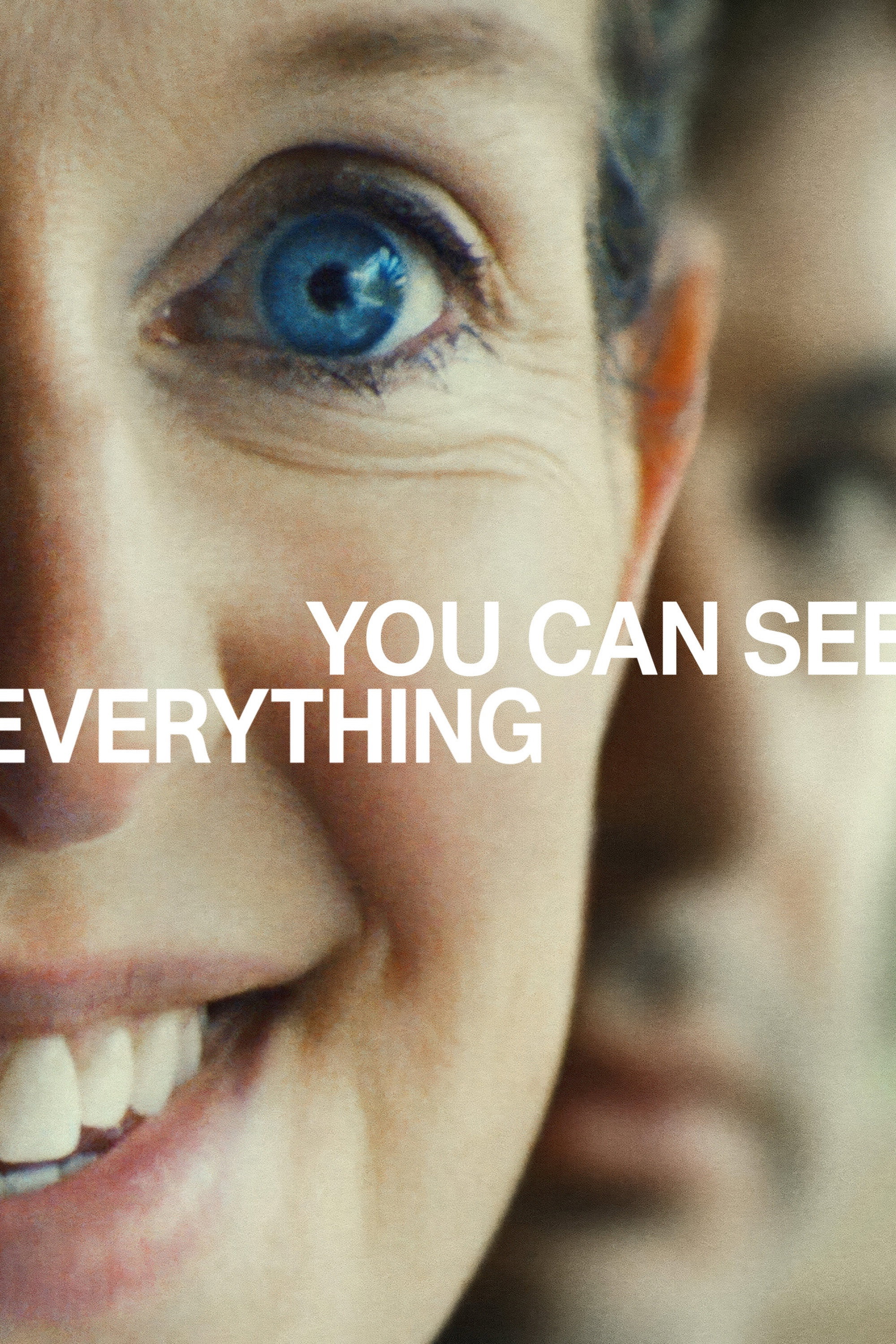
You Can See Everything — Overview & Production Details
You Can See Everything is presented in the supplied metadata as an English-language documentary associated with filmmakers Nathan Fielder and Lance Oppenheim. Its reported premise centres on Elizabeth Holmes, the former Theranos executive whose rise and fall became a major story in technology, business and public accountability. The concept of documenting a controversial public figure over an extended period creates opportunities to examine self-presentation, observation and the limits of documentary filmmaking. The details below reflect the supplied information and should be checked against official production and distribution sources.
| Title | You Can See Everything |
|---|---|
| Release Date | 16 October 2026 (supplied date; independent verification required) |
| Director | Nathan Fielder and Lance Oppenheim |
| Screenplay / Writing | Not specified in the supplied metadata |
| Main Cast / Participants | Elizabeth Holmes, Nathan Fielder, Billy Evans, Amanda Seyfried, Christopher Abbott and Lance Oppenheim |
| Original Language | English |
| Genre | Documentary |
| Runtime | 2 hours 54 minutes (as supplied; unverified) |
| Music | Ari Balouzian |
| Cinematography | David Bolen |
| Production Companies | Blow Out Productions, To Be Formed and A24 |
| Country | United States of America |
| Reported Rating | 9.1/10 (source and rating date not independently verified) |
| Reported Budget | ₹70,00,000 (supplied figure; requires verification) |
| Official Streaming | Not confirmed. No verified title-specific streaming service or viewing link is available in the supplied metadata. |
You Can See Everything — Story & Synopsis
According to the supplied synopsis, the documentary begins shortly before Elizabeth Holmes is due to enter prison. The former Silicon Valley entrepreneur reportedly allows a sceptical film crew to observe her life, creating an unusual opportunity to examine the relationship between a public figure and the people documenting her. What initially appears to be a focused portrait develops into a reported three-year filmmaking journey. This extended timeframe raises questions about personal reinvention, public scrutiny, media responsibility and the distance between a carefully managed image and a more complicated reality. The premise invites viewers to consider how documentary storytelling changes when its subject knows the camera is watching.
Editorial note: This synopsis is based on the supplied description and has not been independently confirmed against an official synopsis.
Cast & Participants
| Participant / Actor | Listed Role |
|---|---|
| Elizabeth Holmes | Self |
| Nathan Fielder | Self |
| Billy Evans | Self |
| Amanda Seyfried | Self / Elizabeth Holmes |
| Christopher Abbott | Billy Evans |
| Lance Oppenheim | Self |
| Christian Rasmus Holmes IV | Self |
| Noel Anne | Self |
| Gary Wilmes | A24 Executive |
| Phillip Andre Botello | A24 Executive |
The names and roles above are reproduced from the supplied metadata. Because the listing combines documentary participants and actors, the exact credits and role descriptions should be verified against official production materials.
You Can See Everything (2026) Critical Review
Review methodology: This is an original, premise-based editorial assessment derived from the supplied synopsis and production information. It is not a claim of having watched the completed film, and it does not represent verified audience consensus or professional review scores. The actual film's execution should be assessed independently.
1. Narrative Depth / Premise & Thematic Architecture
The central premise of You Can See Everything offers a compelling starting point for a documentary about reputation, accountability and the construction of public identity. Elizabeth Holmes became widely associated with Theranos, the health-technology company whose promises and eventual collapse raised major questions about corporate governance, scientific evidence and investor trust. A film that follows her life during a period of intense public attention could examine what happens when a person accustomed to controlling a narrative becomes the subject of someone else's camera.
The reported decision to extend the filmmaking process over several years adds another layer of potential complexity. A short observational portrait might focus on one particular moment, but a longer production can reveal how people adapt their behaviour over time. It may also expose the limits of first impressions. The passage of time can alter a subject's priorities, public standing and relationships, giving the filmmaker an opportunity to question whether the person seen at the beginning remains recognisable at the end.
The strongest version of this concept would avoid reducing the story to a simple tale of a fallen entrepreneur. The more interesting questions concern how ambition interacts with institutional pressure, why persuasive narratives can gain influence, and how personal conviction can become entangled with public performance. The film could also invite viewers to examine the systems that reward confident promises, particularly when complex technology is presented as a solution to urgent human problems.
Documentary ethics are central to this structure. An invitation to film someone does not automatically guarantee unrestricted access to the truth. A subject may perform for the camera, withhold information or attempt to shape the final account. Filmmakers, in turn, make decisions about what to record, what to include and how to arrange events. The premise therefore has the potential to turn the filmmaking process itself into part of the story. Whether the finished documentary fully explores these questions cannot be determined from the supplied synopsis alone.
2. Performances & Character Dynamics
Unlike a conventional scripted drama, a documentary relies heavily on the presence, behaviour and perspectives of its real-life participants. If the supplied participant information is accurate, Holmes occupies the centre of the narrative, while Fielder and Oppenheim bring the perspective of filmmakers observing a subject whose public reputation is already shaped by extensive media coverage. That relationship could create an unusually layered dynamic: the person being filmed is also aware that the resulting material may influence how audiences understand her.
For viewers, the key issue is not simply whether a participant appears convincing. It is how the documentary contextualises what the camera captures. A composed public statement, an uncomfortable pause or an apparently spontaneous interaction can be interpreted in several ways. Responsible documentary storytelling should distinguish observable behaviour from assumptions about private motivation. It should also give viewers enough context to understand the limits of the footage rather than encouraging them to treat every gesture as definitive evidence of character.
The supplied metadata also lists Amanda Seyfried and Christopher Abbott in roles connected with Holmes and Billy Evans. Their exact relationship to the production is unclear from the information provided. If the project incorporates dramatic reconstruction or performed material, those sequences would raise different questions from direct observational footage. Clear distinctions between real participants, reenactments and scripted performances would help viewers understand the film's approach and avoid confusion about what is being presented as documentary evidence.
Supporting participants can broaden a documentary beyond its central subject, particularly when their experiences challenge or complicate the dominant public narrative. The value of an ensemble lies in the diversity and relevance of its perspectives, not merely the number of names in the credits. Without verified access to the finished film, the contributions and effectiveness of individual participants remain matters for confirmation rather than definitive judgment.
3. Direction, Technical Craft, Cinematography, and Soundscape
Nathan Fielder and Lance Oppenheim are identified as directors in the supplied data. A documentary built around sustained observation requires a clear editorial approach, particularly when the subject is both highly recognisable and surrounded by competing interpretations. The filmmakers must establish a balance between proximity and critical distance: too much detachment can make the film feel emotionally remote, while excessive intimacy can risk accepting a subject's preferred narrative without sufficient scrutiny.
David Bolen is listed as the cinematographer. In observational documentary filmmaking, visual composition can communicate a great deal without overt commentary. Framing, camera distance, the use of available light and the relationship between a person and their surroundings can influence whether a moment feels exposed, private or carefully staged. A restrained visual style may suit a story about image management and scrutiny, but technical choices are most effective when they support the subject matter rather than merely making ordinary events appear dramatic.
Ari Balouzian is credited with the music. Sound design and scoring require particular care in nonfiction storytelling because music can quietly direct audience sympathy. A score that is too insistent may tell viewers how to interpret a person before the evidence has been presented. More measured use of music, room tone and silence can leave space for uncertainty and allow the recorded material to carry its own emotional weight.
The reported runtime of two hours and fifty-four minutes, if accurate, would place substantial demands on the documentary's pacing. An extended running time can support gradual character development and reveal meaningful changes across a long production period. It can also lead to repetition if scenes do not add new information or alter the viewer's understanding. Editing must therefore create a coherent progression from observation to reflection, with enough context to connect personal moments to the larger public story. These are the relevant standards for evaluating the film's craft; its actual cinematography, music and editing cannot be reliably assessed from metadata alone.
4. Final Verdict & Content Rating
Based on the supplied premise, You Can See Everything has the potential to interest viewers drawn to documentary filmmaking, corporate controversy, technology culture and the complicated relationship between public image and accountability. Its most distinctive opportunity is the possibility of examining not only a controversial subject, but also the process through which a documentary constructs its own version of events. The reported long-term observation could provide a useful framework for exploring how identity, reputation and self-presentation change under sustained scrutiny.
The main challenge is maintaining a thoughtful balance between access and analysis. Intimate footage can be revealing, but proximity alone does not guarantee insight. A persuasive documentary needs context, transparent editorial choices and a willingness to distinguish evidence from interpretation. It should also consider the wider institutional environment without allowing the personal story to obscure questions about responsibility and the consequences of failed claims.
Editorial verdict: The premise is intriguing and potentially rich in ethical and cultural questions, but a definitive recommendation requires verification of the release and an assessment of the finished film. The supplied rating of 9.1/10 should not be treated as an independently verified critical score.
Indicative content guidance: Give