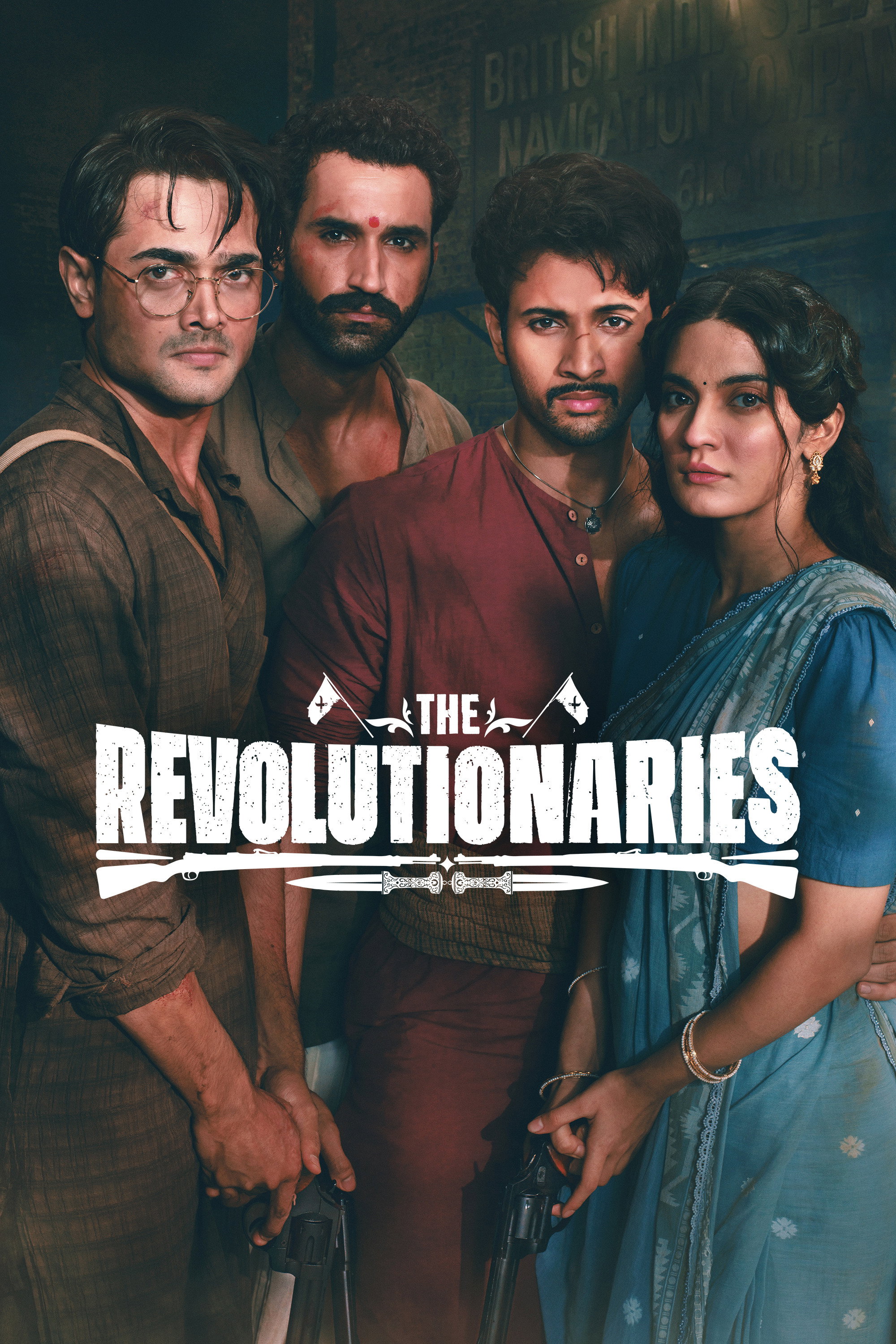
Overview & Production Details
The Revolutionaries is a Hindi historical drama directed by Nikkhil Advani and produced under the Emmay Entertainment banner. Set during the struggle against British colonial rule, the series focuses on revolutionary figures whose activities and sacrifices form an important, though sometimes less familiar, part of India's independence history. It draws inspiration from historical events and Sanjeev Sanyal's book Revolutionaries: The Other Story of How India Won Its Freedom, presenting an ensemble story of resistance, underground organisation, personal conviction, and the pursuit of national freedom.
| Title | The Revolutionaries |
|---|---|
| Release Date | 11 September 2026 |
| Director | Nikkhil Advani |
| Writers | Sanyukta Shaikh Chawla, Akshita Wadhwana, Shobhit Narang, Rutvi Mehta |
| Source Material | Inspired by historical events and Sanjeev Sanyal's book about India's revolutionary freedom movement. |
| Main Cast | Bhuvan Bam, Rohit Saraf, Gurfateh Pirzada, Pratibha Ranta, Jason Shah, Paoli Dam, Tota Roy Chowdhury, Neil Bhoopalam |
| Original Language | Hindi |
| Genre | Historical Drama, Action, Period Drama |
| Cinematography | Gairik Sarkar |
| Production | Emmay Entertainment |
| Country | India |
| Rating | 7.7/10 as supplied in the provided metadata. Ratings vary across platforms and may change over time. |
| Episodes | 8 episodes in Season 1 |
| Official Streaming | Watch on Amazon Prime Video |
Prime Video lists the series with Hindi audio and additional regional-language options in supported markets. Check the official title page for current availability, subtitles, and audio options in your country.
Critical Review
a) Narrative Depth / Premise & Thematic Architecture
The Revolutionaries takes on a significant chapter of India's freedom struggle by placing armed resistance at the centre of its historical drama. Set in the early twentieth century, the series follows figures including Rash Behari Bose, Sachindranath Sanyal, Bagha Jatin, and Pratibha Lahiri as they challenge the authority of the British Empire. Rather than presenting independence history through a single familiar perspective, it draws attention to revolutionaries who believed that secret networks, coordinated operations, and direct confrontation had a place in the wider struggle for freedom.
The premise provides strong material for a television series. Revolutionary movements involve more than dramatic missions: they require trust, planning, secrecy, ideological commitment, and the willingness to accept serious personal risks. Characters must decide whom to trust, how much to reveal, and whether a mission is worth the danger it creates for their comrades and families. These pressures can make historical drama suspenseful while giving its protagonists complex motivations beyond simple declarations of patriotism.
The show's central themes include sacrifice, national identity, loyalty, resistance, and the tension between private life and public duty. The characters' commitment to independence repeatedly places personal relationships under strain. Romantic attachments, family expectations, and friendships can become vulnerabilities when secrecy is essential. Such conflicts offer opportunities to show that the freedom struggle was not only a sequence of famous events but also a deeply personal experience shaped by difficult decisions and uncertain outcomes.
Its historical subject is one of its strongest assets, particularly for viewers interested in learning about the many strands of the independence movement. The series also has a responsibility to distinguish dramatic invention from established history. Television adaptations inevitably compress events, combine incidents, or reshape conversations for narrative clarity. Those choices can make a story more accessible, but viewers should not treat every scene or character interaction as a precise historical record. The drama is best approached as an interpretation of a real period rather than a substitute for historical research.
The main challenge is balancing the scale of the movement with the inner lives of the people involved. Large conspiracies, dangerous missions, and confrontations with colonial authorities can establish momentum, but the emotional stakes become more meaningful when the audience understands what motivates each revolutionary and what each person stands to lose. The premise offers ample opportunity for that depth, even when the pace and scope of the series sometimes favour events over reflection.
b) Performances & Character Dynamics
Bhuvan Bam takes on Rash Behari Bose, a historical revolutionary associated with anti-colonial resistance and underground political activity. The role calls for a mixture of conviction, urgency, and strategic thinking. Bam's screen presence brings energy to the character, while the dramatic demands require him to communicate the pressure of operating under constant threat. The character is most compelling when determination is balanced with the uncertainty and personal cost that accompany a dangerous mission.
Rohit Saraf plays Sachindranath Sanyal, whose part in the story brings personal loyalties into contact with revolutionary ambition. The role benefits from restraint: a character torn between competing obligations can be more revealing when doubts emerge through small reactions and difficult decisions rather than repeated speeches. Saraf provides a contrasting presence to the more overt intensity of the revolutionary action, helping the ensemble explore the emotional consequences of commitment.
Gurfateh Pirzada's portrayal of Bagha Jatin adds another dimension to the group. The character's reputation and physical confidence suit a story involving planning, risk, and resistance. Pratibha Ranta, as Pratibha Lahiri, brings an important female perspective to a narrative that might otherwise concentrate too heavily on male revolutionaries. Her character's presence broadens the series' exploration of courage and participation in the freedom movement, although viewers may wish for even more room to examine the motivations and agency of the women involved.
Jason Shah plays the British officer identified in the supplied cast information as Lt. Col. Reginald Dyer. The role represents the coercive power of the colonial administration and provides an adversarial force for the revolutionaries. A character in this position is most effective when he feels like more than a simple obstacle: institutional authority, personal ambition, and the mindset used to justify repression can all add complexity to the conflict. Paoli Dam and the wider supporting cast help create a social world beyond the central group, giving the story connections to families, safe houses, and networks of resistance.
The ensemble format allows several characters to contribute to the wider struggle, but it also creates a challenge: screen time must be distributed without reducing important figures to brief appearances or plot functions. The relationships are most effective when individual convictions clash, when trust must be earned, and when the audience can see the personal price of a collective mission. These interactions provide the human foundation that historical action needs to remain engaging across multiple episodes.
c) Direction, Technical Craft, Cinematography, and Soundscape
Nikkhil Advani directs the series with an emphasis on the scale and urgency of the period. The production must recreate an era of colonial administration, clandestine meetings, public unrest, and covert revolutionary activity. Locations, architecture, props, costumes, and period vehicles are central to making that world believable. When these elements work together, the setting can communicate both the power of the empire and the resourcefulness required by those working against it.
Cinematography by Gairik Sarkar contributes to the show's visual identity. Period drama benefits from images that establish geography and atmosphere while keeping the viewer close to the characters' immediate risks. Wider frames can communicate the scale of public spaces and the reach of colonial power, while tighter compositions can make a private meeting feel tense and dangerous. The visual style also has to distinguish between moments of spectacle and the quieter consequences of revolutionary activity.
Action and suspense sequences provide the series with forward momentum. Attempts to avoid surveillance, move information, acquire resources, or execute a risky plan can create tension without relying exclusively on large confrontations. Their effectiveness depends on clarity: audiences need to understand the objective, the danger, and the consequences if a mission fails. The most memorable sequences in historical drama often emerge when action grows directly from character decisions rather than functioning as spectacle on its own.
The production design gives the story a polished period-drama appearance, but visual grandeur can become a double-edged sword. Beautifully arranged sets and costumes may create a convincing historical atmosphere, yet an overly pristine presentation can make hardship feel distant. The material world should communicate the uneven conditions of colonial India, including the difference between those who command resources and those who must operate discreetly with limited support. A stronger sense of everyday life can make extraordinary acts of resistance feel more grounded.
Music and sound design are equally important to the emotional rhythm. A score can intensify a pursuit or lend weight to a turning point, but it should also leave room for silence, conversation, and the sounds of the setting. Period drama risks becoming overemphatic if every revelation is accompanied by heightened music or an extended speech. The most effective technical choices support the characters and historical context without constantly instructing the audience how to feel.
d) Final Verdict & Content Rating
The Revolutionaries brings an important subject to a contemporary television audience: the young people and networks who pursued armed resistance against British colonial rule. Its historical foundation, ensemble cast, period production, and mission-driven plot give it clear appeal for viewers who enjoy patriotic dramas, political thrillers, and stories rooted in India's independence movement. It also encourages interest in historical figures whose contributions may receive less attention in mainstream retellings.
Its ambitions are substantial, and that scale can sometimes compete with emotional intimacy. When the story moves quickly between missions and supporting plotlines, some characters may receive less development than their historical importance suggests. Viewers looking for detailed historical analysis may also want to supplement the series with books and reliable historical sources. The dramatized format offers an entry point into the subject, but it should not be mistaken for a comprehensive account of the independence movement.
Overall, the series is worth considering for audiences interested in historical resistance, revolutionary networks, and ensemble period dramas. Its most lasting value lies in directing attention toward a wider range of people involved in the struggle for independence and inviting viewers to explore their stories further.
Content guidance: The series is intended for mature audiences and includes violence, armed confrontations, threatening situations, smoking or drug-related content, and strong language according to platform guidance. Viewer discretion is advised. Check the official age rating and episode-specific advisories in your region before watching.