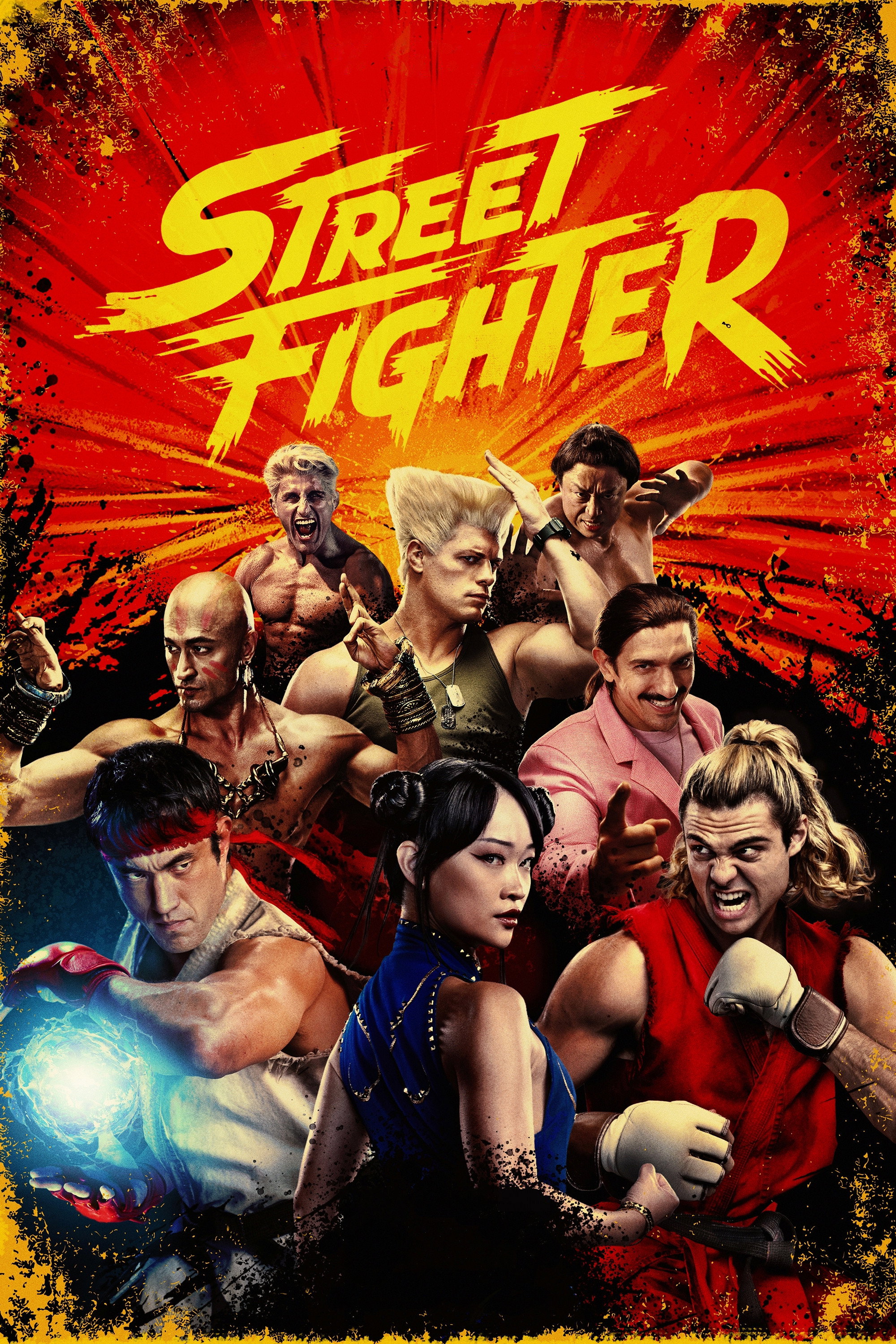
Overview & Production Details
| Title | Street Fighter (2026) |
|---|---|
| Release Date | 13 October 2026 — supplied metadata; theatrical release details should be verified against official announcements. |
| Director / Screenplay | Director: Kitao Sakurai. Screenplay credits supplied: Dalan Musson, Gary Dauberman, T.J. Fixman and Kitao Sakurai. |
| Main Cast | Andrew Koji as Ryu; Noah Centineo as Ken Masters; Callina Liang as Chun-Li; David Dastmalchian as M. Bison; Andrew Schulz as Dan Hibiki; Joe Anoa'i as Akuma; Cody Rhodes as Guile; Jason Momoa as Blanka; Eric André as Don Sauvage; 50 Cent as Balrog; Don Lee as Gouken; and Mel Jarnson as Cammy. |
| Original Language | English |
| Genre | Action, Fantasy, Martial Arts |
| Runtime | Approximately 2 hours, as provided in the supplied metadata. |
| Music | Leo Birenberg and Zach Robinson |
| Cinematography | Ken Seng |
| Production Companies | Capcom and Legendary Pictures |
| Country | Japan and the United States |
| Official Streaming |
Not yet verified.
No specific streaming service is listed because an official platform and release date have not been independently confirmed here. Check the rights holder's official announcements before publishing streaming details. |
Street Fighter (2026) Critical Review
Narrative Depth / Premise & Thematic Architecture
Street Fighter draws on one of the most recognisable foundations in fighting-game entertainment: a world in which extraordinary martial artists meet to test their skills, confront personal rivalries and pursue competing ideas of strength. The supplied story places Ryu and Ken Masters at the centre of a renewed conflict after Chun-Li recruits them for the World Warrior Tournament. What initially appears to be a straightforward contest gradually develops into a more complicated struggle involving a dangerous conspiracy and unresolved questions from the fighters' pasts.
The tournament format is a natural fit for a cinematic adaptation because it provides a clear structure for introducing different fighting styles, personalities and motivations. Each encounter can establish a character's abilities while revealing something about their philosophy. Yet a sequence of matches alone cannot sustain a feature-length narrative. The larger conspiracy therefore has an important job: it must connect the fights to meaningful stakes and make the outcome matter beyond the question of who is physically strongest.
Ryu and Ken offer an especially useful emotional contrast. Both are skilled fighters, but their relationship can be explored through differences in temperament, ambition and their understanding of martial discipline. Their estrangement gives the story a personal conflict that runs alongside the external tournament. If the narrative develops that relationship carefully, the action can become an expression of character rather than simply a series of spectacular set pieces. Their past disagreements should influence their present decisions, allowing the story to build tension through loyalty, mistrust and the possibility of reconciliation.
Chun-Li's role as the person who brings the two fighters back into the conflict also creates an opportunity to broaden the story beyond their rivalry. Her motivations need to be more substantial than merely assembling a collection of familiar characters. A strong adaptation gives every major participant a reason to enter the tournament and a personal stake in the conspiracy surrounding it. The wider cast can then function as a collection of distinct perspectives rather than a procession of recognisable names.
The themes of honour, identity, discipline and responsibility are well suited to the franchise. Physical strength may decide individual confrontations, but the deeper test is how characters choose to use that strength. The conspiracy can challenge their beliefs, while the tournament can expose the difference between winning and doing what is right. The premise has room for both playful genre spectacle and genuine emotional conflict, although its ultimate effectiveness depends on the execution of the screenplay, the clarity of the central mystery and the balance between exposition and action.
Performances & Character Dynamics
Andrew Koji's casting as Ryu places a martial-arts performer at the centre of a character whose identity is closely associated with focus, training and self-control. Ryu is most compelling when his quiet determination communicates more than dialogue alone. The role calls for physical precision as well as an ability to convey internal conflict without sacrificing the character's reserved nature. The challenge is to make his commitment to martial discipline emotionally accessible to viewers unfamiliar with the games.
Noah Centineo's Ken Masters provides a contrasting presence. The Ryu–Ken relationship is one of the franchise's defining dynamics, and the film's dramatic strength depends on making their differences feel personal rather than superficial. Their shared history should give even ordinary conversations a sense of tension, while their encounters in combat can reveal competing attitudes toward achievement, loyalty and control. A convincing partnership allows each fighter to challenge the other, making their connection central to the story rather than a secondary detail between battles.
Callina Liang's Chun-Li is important to the wider narrative because she initiates the reunion and helps direct the fighters toward the tournament. Her character can supply determination, intelligence and a distinct sense of purpose. David Dastmalchian's M. Bison introduces the prospect of a formidable antagonist, whose presence should represent more than physical danger. A memorable villain has an understandable method of pursuing power, even when the consequences of that pursuit are destructive.
The ensemble is unusually broad, including Jason Momoa as Blanka, Cody Rhodes as Guile, Joe Anoa'i as Akuma, Andrew Schulz as Dan Hibiki, 50 Cent as Balrog, Don Lee as Gouken, Mel Jarnson as Cammy and Eric André as Don Sauvage. Such a collection creates opportunities for varied fighting styles and contrasting personalities. It also creates a practical storytelling challenge: too many introductions can leave individual characters without enough time to develop. Each supporting role needs a clear function, whether that involves advancing the conspiracy, challenging a protagonist or delivering a memorable encounter.
Because the supplied information does not establish the finished performances or the quality of individual scenes, definitive claims about acting success would be premature. The cast's potential, however, lies in combining physical presence with distinct characterisation. The most satisfying outcome would give familiar figures enough personality to stand apart while keeping the emotional focus on Ryu and Ken. Their relationship should remain the narrative anchor even as the tournament introduces increasingly colourful opponents.
Direction, Technical Craft, Cinematography, and Soundscape
Kitao Sakurai is credited as director, with the supplied screenplay credits naming Dalan Musson, Gary Dauberman, T.J. Fixman and Sakurai. A fighting-game adaptation demands a careful balance between fidelity to its source and the requirements of cinematic storytelling. Game characters often communicate through distinctive visual designs, signature techniques and concise personal motivations. A film must preserve the recognisable appeal of those elements while connecting them through a coherent plot, believable emotional transitions and a consistent tone.
Ken Seng's cinematography will be central to the readability and impact of the action. Martial-arts scenes benefit from clear geography, deliberate framing and editing that allows audiences to understand the relationship between movement and consequence. Rapid cutting can create energy, but it can also obscure the skill of the performers if used without restraint. Wider compositions, well-timed close-ups and carefully staged movement can make a confrontation exciting while allowing the fighters' techniques to remain visible.
Production design presents a different challenge. The Street Fighter universe includes characters whose appearance, physical abilities and cultural influences are immediately recognisable to fans. Translating that stylised world into live action requires costumes, locations, colour choices and practical effects that feel cohesive. Excessive realism could drain the material of its playful identity, while visual exaggeration without consistency could make the world feel disconnected. A successful design approach finds a balance between comic-book intensity and a believable physical environment.
The music credits list Leo Birenberg and Zach Robinson. A score for this kind of film needs to support both the scale of the tournament and the individual identity of its fighters. Distinctive musical motifs can help audiences associate certain sounds with particular characters or rivalries, while rhythmic percussion can reinforce the physical momentum of a fight. Sound design is equally important: impacts, movement, crowd reactions and environmental acoustics should contribute to the feeling that each encounter has weight.
The most important directorial challenge is tonal consistency. The franchise has room for serious rivalries, flamboyant personalities, heightened action and humour. Those ingredients can coexist, but the transitions must feel intentional. If the conspiracy dominates too heavily, the individual fighters may lose their appeal; if the film focuses exclusively on spectacle, its emotional conflicts may feel underdeveloped. Strong editing and careful pacing can keep these competing elements connected, giving the tournament both entertainment value and narrative significance.
Final Verdict & Content Rating
On the strength of the supplied premise, Street Fighter has the ingredients for an energetic martial-arts fantasy: a globally recognisable collection of fighters, the reunion of two estranged central characters, a high-stakes tournament and a conspiracy that threatens to turn competition into something more dangerous. The combination offers a route to entertaining action while preserving the personal rivalries and philosophies that distinguish the franchise.
Its biggest opportunity is to make the spectacle serve the characters. Ryu and Ken need an emotionally convincing relationship, Chun-Li needs a meaningful purpose in the central conflict, and the supporting fighters need more than brief appearances. The conspiracy should connect the tournament's events rather than function as a disconnected explanation for the fighting. Meanwhile, choreography, cinematography, editing, production design and sound must work together to create action that is both visually exciting and easy to follow.
Fans of the games may be particularly interested in the character roster and the prospect of seeing familiar rivalries adapted for the screen. Viewers who are new to the franchise will need a story that introduces its world naturally without relying too heavily on references or background knowledge. A successful adaptation can serve both audiences by making the fights exciting in their own right while giving each major character a clear motivation.
Editorial verdict: The supplied story offers promising ingredients for a character-led action spectacle, but the final judgement should depend on the completed film rather than its cast list and synopsis alone. This is a premise-based editorial assessment, not a verified review of the finished movie.
Suggested content advisory: Martial-arts violence, physical confrontations, peril and fantasy action may be relevant based on the described premise. This is not an official age classification; check the applicable regional rating and official content guidance before viewing.
Editorial rating: Not assigned. The supplied metadata lists a rating of 6.4, but its source and verification status are unknown. It should not be presented as an independently confirmed critic or audience score.