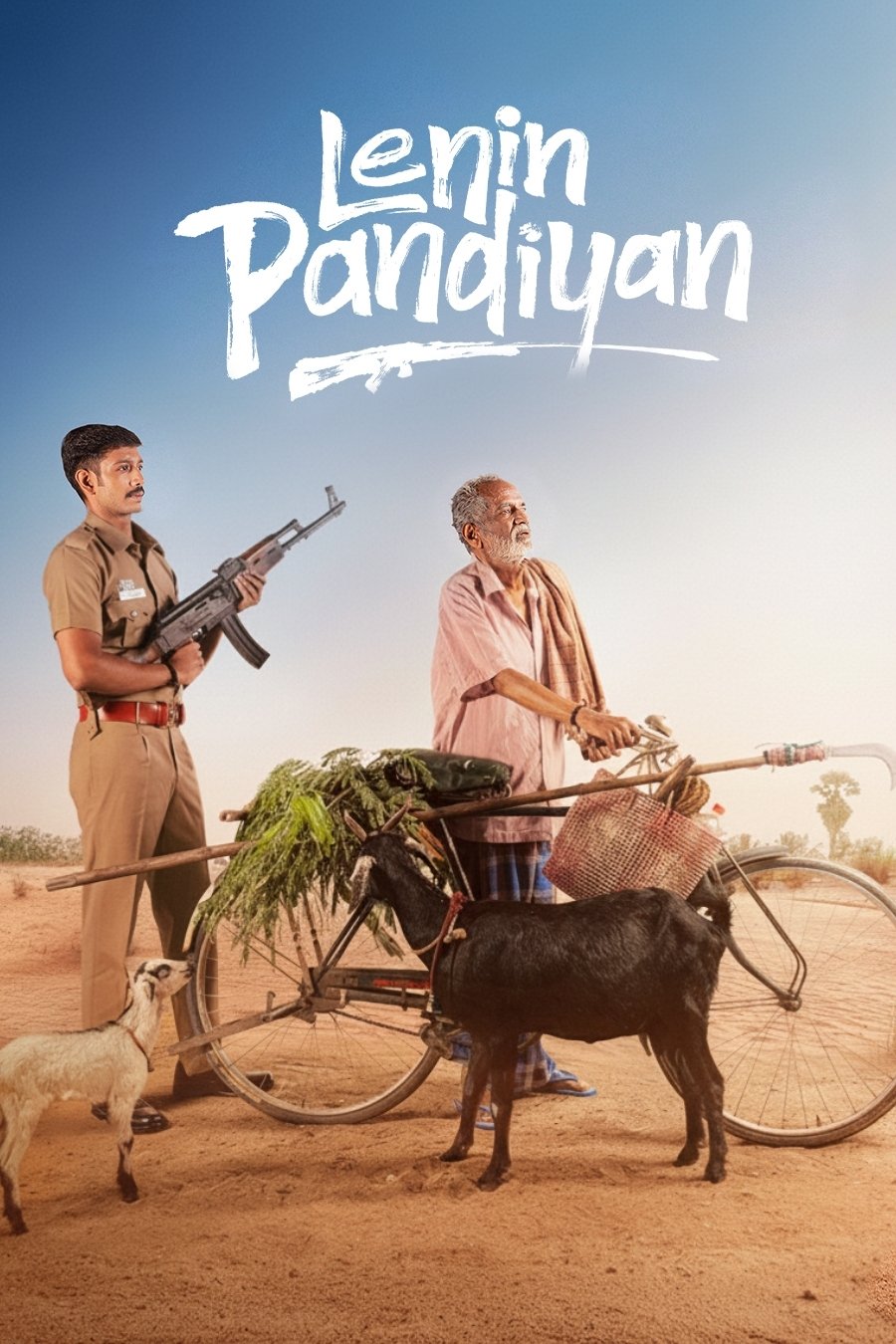
Lenin Pandiyan (2026) – Movie Overview
| Movie Title | Lenin Pandiyan |
| Release Date | 25 September 2026 |
| Director | D. D. Balachandran |
| Writer | D. D. Balachandran |
| Main Cast | Gangai Amaran, Roja Selvamani, Darshan Ganesan, Shrita Rao, George Mariyan |
| Music | Ilaiyaraaja |
| Cinematography | Edwin Sakay |
| Production Company | Sathya Jyothi Films |
| Language | Tamil |
| Genre | Drama, Crime, Romance |
| Official Streaming | Watch on Amazon Prime Video |
Streaming availability, language options and subscription requirements may vary by country.
Lenin Pandiyan (2026) – Movie Review
Lenin Pandiyan is a Tamil rural drama that brings together questions of social justice, political influence and ordinary people's struggle against powerful interests. Directed by D. D. Balachandran, the film uses the setting of Manamadurai in Sivagangai district to explore the consequences of illegal sand mining and the vulnerability of people caught in its wider network. With Gangai Amaran, Roja Selvamani and Darshan Ganesan among its central performers, the film builds its emotional foundation around an elderly couple and a young police constable drawn into an increasingly difficult situation.
Rather than depending entirely on a conventional action premise, the story places its characters within a recognisable social conflict. The contrast between the couple's relatively simple life and the influence of those involved in illegal activity gives the narrative its central tension. The film also brings romance and personal relationships into this wider framework, creating a combination of emotional drama and crime-oriented storytelling.
Narrative Depth and Thematic Architecture
The central subject of Lenin Pandiyan is the struggle of ordinary citizens when their lives are affected by organised exploitation and political influence. Illegal sand mining is not merely used as a background detail; it provides the conflict through which the film examines authority, accountability and the difficulty of seeking justice. By locating the story in a rural community, the narrative draws attention to the relationship between local livelihoods, natural resources and people who exercise power over them.
The elderly couple provides an important emotional contrast to the intimidating world surrounding the conflict. Their vulnerability makes the stakes personal, while their determination gives the story a human centre. The introduction of a young constable as their protector adds another dimension. He is not presented as an established action hero but as someone still finding his place and learning how to respond when duty becomes complicated by real danger.
This combination creates opportunities for the film to discuss courage in an everyday context. The idea that justice can depend on people who appear unremarkable is a useful dramatic foundation. The relationship between the older characters and the inexperienced officer also gives the story room for companionship and emotional development. At the same time, the inclusion of romance means the screenplay has to balance several strands without weakening its central social conflict.
The film's strongest thematic potential lies in its attention to people who do not possess wealth or influence but still insist on being heard. Its subject is relevant to rural communities where environmental exploitation and local power structures can have lasting consequences.
Performances and Character Dynamics
Gangai Amaran occupies a particularly important position in the film because the elderly central character carries much of its emotional weight. The role calls for a balance between innocence, affection, vulnerability and determination. His presence gives the story a grounded human perspective, helping the audience understand why the conflict matters beyond its political dimensions.
Roja Selvamani adds an important counterpoint as the elderly man's partner. Her character contributes to the domestic and emotional side of the narrative, giving the couple a shared identity rather than making the story solely about one individual's struggle. The strength of this relationship is central to the film's emotional appeal, especially when the characters are placed under pressure.
Darshan Ganesan's role as Maravarman Sundarapandiyan introduces the younger perspective. The constable's position allows the narrative to explore uncertainty, professional responsibility and the process of developing confidence. His interactions with the elderly couple form an important relationship within the story. Shrita Rao contributes the romantic dimension through Priya, while George Mariyan, Aadukalam Naren, Yugendran and Bose Venkat add further characters to the film's social and institutional setting.
The supporting cast is important in a story built around a community rather than a single hero. Characters representing authority, local administration and opposing interests help create the wider environment in which the central conflict unfolds. The effectiveness of these performances depends on how naturally they support the main characters and maintain the realism of the rural setting.
Direction, Cinematography and Technical Craft
D. D. Balachandran approaches the film through a subject that combines social relevance with accessible dramatic elements. The rural setting provides a natural foundation for a story about land, resources and local influence. The director's challenge is to make the political conflict understandable without turning the film into a series of explanations. Personal experiences and character relationships are important tools for making such issues emotionally meaningful.
Edwin Sakay's cinematography is a significant part of the film's visual identity. A story set around the villages and riverbanks of Sivagangai benefits from photography that captures the landscape as more than a decorative backdrop. The surrounding environment helps establish the characters' connection to their community and gives the conflict a specific geographical context. Rural locations can also create a strong contrast between the quiet rhythms of everyday life and the tension caused by exploitation and intimidation.
Ilaiyaraaja's music brings an experienced musical voice to the project. In a drama that depends on relationships and emotional changes, the score has the potential to deepen the impact of important scenes without overwhelming the performances. Songs and background music are most effective when they support the mood of the story and allow the characters' emotions to remain at the centre.
The editing and overall technical presentation also matter because the screenplay moves between social conflict, personal relationships and crime-related developments. Maintaining a consistent pace across these elements is essential. A focused approach can make the narrative more engaging, while unnecessary extensions or shifts in tone can reduce the urgency of its central issue.
Final Verdict and Content Rating
Lenin Pandiyan offers a socially grounded premise built around an elderly couple, a young police constable and a conflict involving illegal sand mining. Its combination of rural drama, crime and romance gives it a broader emotional range than a straightforward political thriller. The film's subject encourages reflection on how ordinary people experience the consequences of corruption and how courage can emerge from unexpected places.
Its most interesting element is the relationship between characters from different generations and positions in society. The elderly couple represents the vulnerability of people whose lives are disrupted by forces beyond their control, while the young constable provides a perspective shaped by duty and personal growth. The supporting characters help place their experiences within a larger community and institutional setting.
The film's central subject is compelling, although balancing its social commentary with romance and crime-drama conventions presents a clear storytelling challenge. The emotional relationships need room to develop, while the investigation and struggle for justice require enough momentum to sustain the dramatic tension. These elements work best when they remain connected to the characters rather than becoming separate narrative distractions.
Overall, Lenin Pandiyan is a rural Tamil drama with a relevant social theme, an experienced ensemble and music by Ilaiyaraaja. Viewers interested in stories about justice, community life and the struggles of ordinary people may find its premise appealing. It is a film whose central subject invites discussion about accountability, environmental exploitation and the importance of standing up to abuse of power.
Final assessment: A socially relevant rural drama combining family relationships, crime and the pursuit of justice.